

On #MalalaDay, we are honoured to share stories of the heroic girls leading learning in their schools during our recent Seekho Sikhao Saathi project, supported by the Malala Fund. Each case highlights a special socioemotional learning (SEL) outcome that we have been nurturing during this time, by providing careful coaching and support.
- Sadia* – Finding Resilience
Just two weeks before programme started, Sadia faced a devastating personal tragedy – she lost her mother. According to her teacher, before this Sadia was a kind, cheerful girl who loved to joke and make her friends laugh. After her mother’s passing, she withdrew into herself. She became quiet, distant, and stopped participating in classroom discussions. Her grief seemed to have taken her confidence.
“I selected her as a Bari Saathi specifically so that she could engage with younger children. Through these playful activities, I hope she might begin to feel happy at school again and not feel left out.” – Teacher
In the beginning, Sadia struggled. During the first two sessions, she found it hard to guide the younger children and couldn’t manage the group as well as the other Bari Saathi. The teacher often had to step in and help her take charge. But despite her challenges, Sadia didn’t give up. She kept showing up, session after session, carrying on even with the weight of her recent loss.
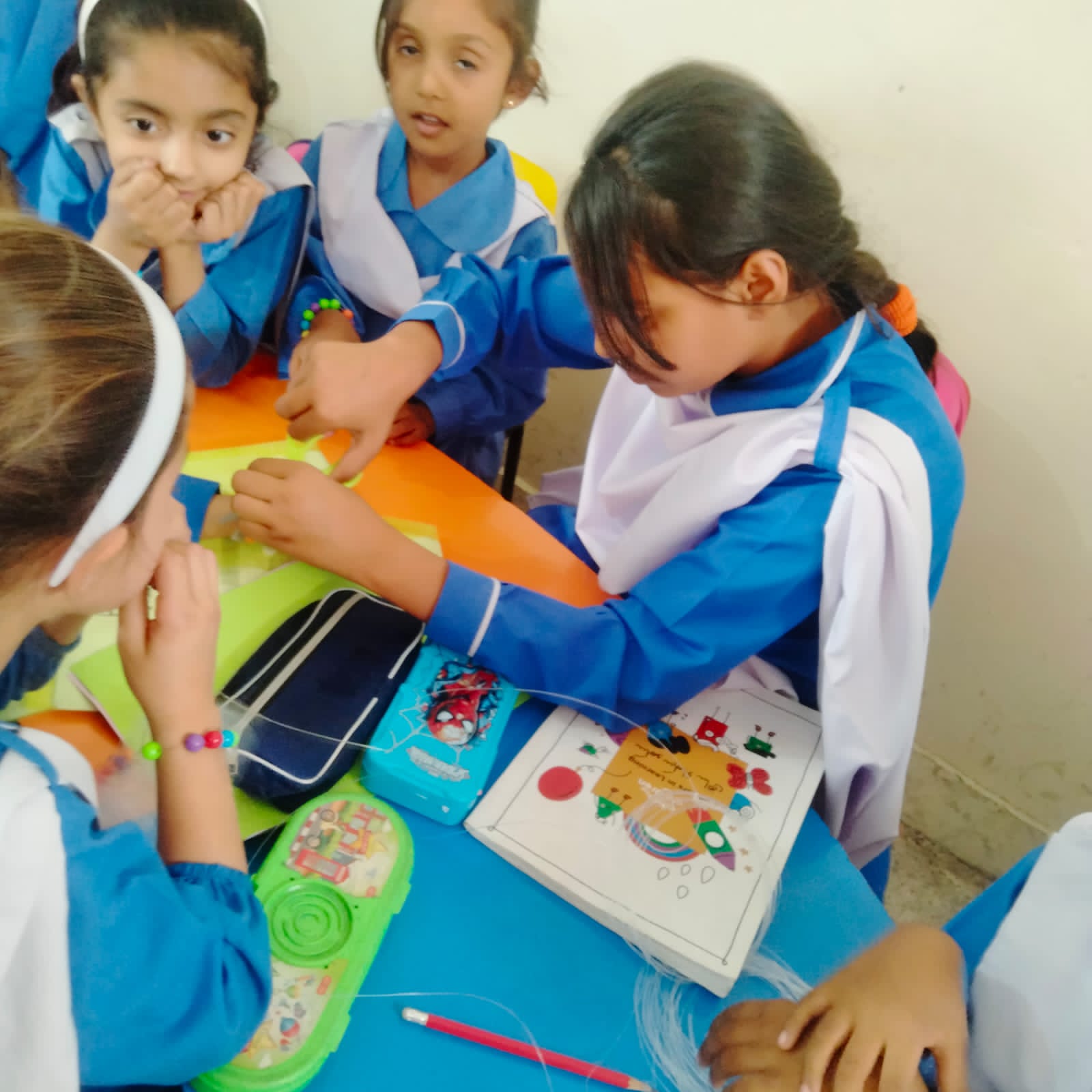
By the third session, something began to shift. Little by little, glimpses of the old Sadia started to reappear. She began to lead the younger children with kindness and patience. By the end of the fourth session, she had formed beautiful bonds with her Chotay Saathi. Her caring attitude and growing confidence made her a friend and role model to them.
As she found her rhythm, Sadia’s creativity blossomed. She started bringing new ideas to the sessions. She recited poems, told stories, and made learning fun for the Chotay Saathi. During one session, she prepared placards to explain the classic “cat and mouse” story and encouraged her group to mimic the sounds of cats and mice, making the story lively and interactive. She even built a model to help the Chotay Saathi understand how plants grow, simplifying a complex process in a way they could easily grasp.
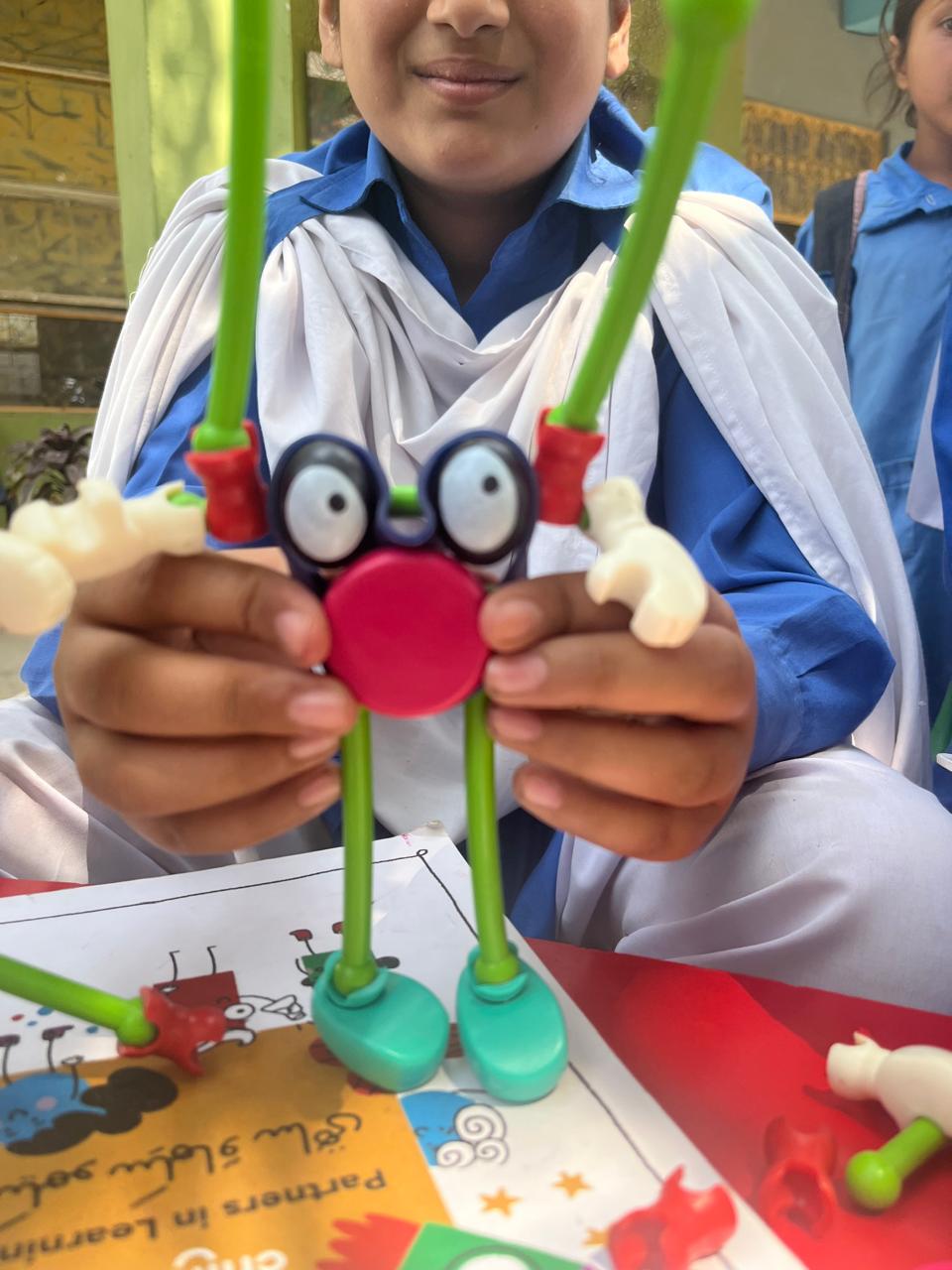
When asked to create a superhero, Sadia designed one with the power to fix everything, both at home and at school, a quiet reflection of her own wishes.
In one of the debrief sessions, she shared: “Initially, I didn’t want to be part of this programme, but after the first session, I began to enjoy it. I especially liked interacting with the children.”
By the end of the programme, Sadia proudly said that the most important skill she gained was “confidence” and that she had become a good listener.
Her teacher noticed the transformation too: “She has improved so much. She’s made new friends and has started participating in classroom discussions again.”
Sadia’s journey is a testament to her strength, resilience, and compassion. In spite of the deep loss she faced, she chose to rise, to heal, and to grow. With her newly rediscovered confidence, she now dreams of becoming a doctor to help the people in her village where no doctors are available.
Hadia’s story reminds us that even in the face of pain, hope lies below the surface. Sometimes, all it takes is a chance to reconnect, to belong, and to lead with kindness.
2. Aimen – Daring to Dream
Aiman, a 7th grade student at IMCG Lohi Bher, was one of the six students selected to become a Bari Saathi. From the very beginning, Aiman stood out. She was full of energy, always eager to lead, and guided the Chotay Saathi not just with care and kindness, but with creativity and joy. Her positive attitude and friendly nature made it easy for her to form strong bonds, both with the Chotay Saathi and her fellow Baray Saathi.
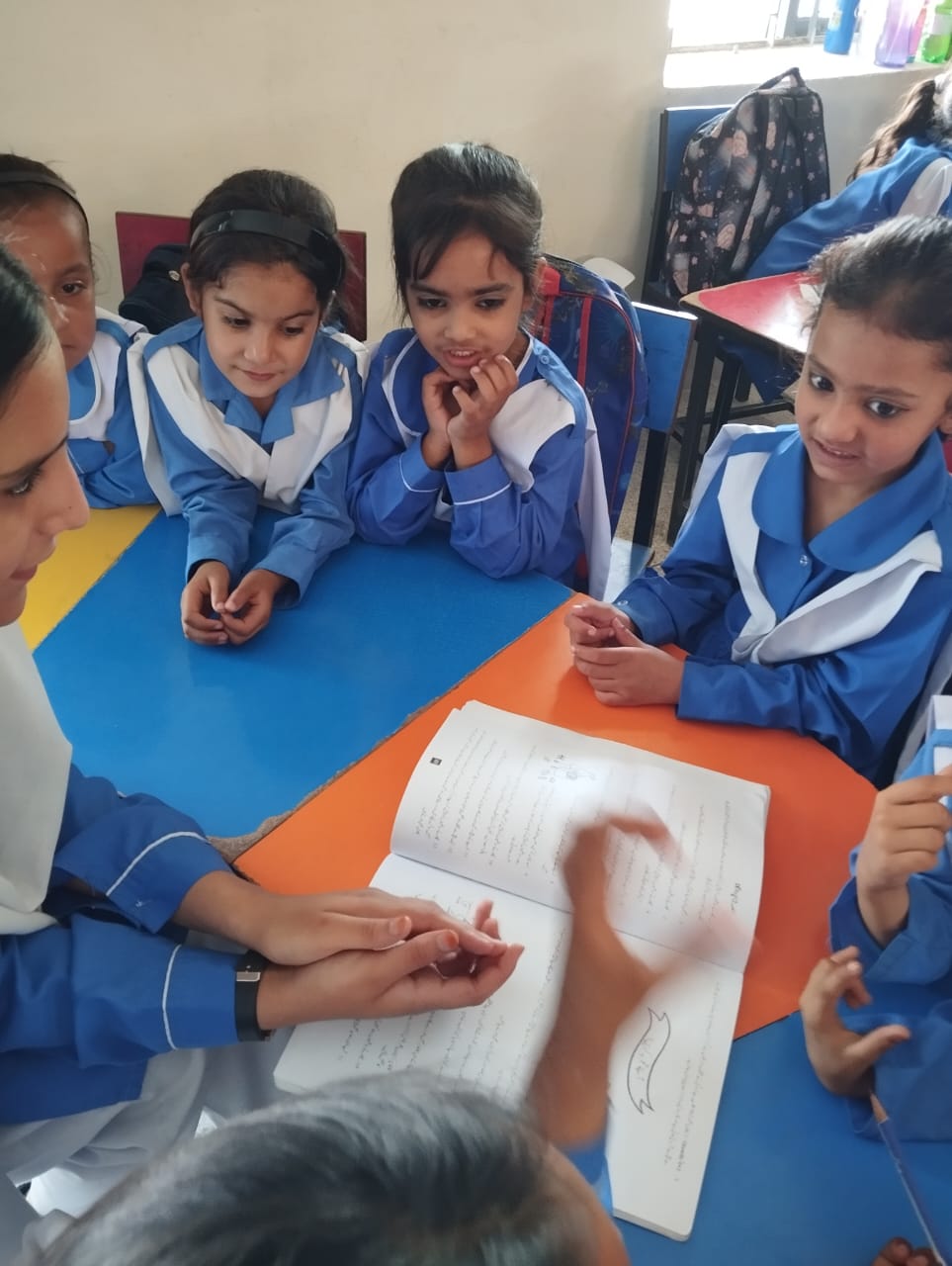
When asked about her experience in the programme, Aiman shared: “I have learned how to be kind and independent. I used to rely on teachers and couldn’t do much on my own, but now I can lead and complete tasks by myself.”
From the start, Aiman expressed that she loved teaching others and taking charge. She believed these skills would help her in the future, especially as she dreams of becoming an entrepreneur and a successful businesswoman. Her passion to lead and her eagerness to grow were evident in every session. She didn’t just guide the younger children, she inspired them.
The programme also sparked a beautiful dream in Aiman’s heart.
“Because of this programme, my dream of teaching others has come true,” she said with pride. “I will work with my mother to open a tuition centre for children who have no access to education. I want to help them however I can.”
Aiman didn’t just talk about making a difference, she started taking steps to make it happen. She spoke to her parents, got their permission, and even included her mother in her mission to support children who are deprived of educational opportunities. Her drive to work for her community and to create space for others to learn is both inspiring and humbling.
Her journey is a powerful reminder that leadership isn’t just about taking charge, it’s about lifting others up and making sure no one is left behind. Aiman’s energy, compassion, and dedication push us all to try, just try, to build a world where every child has equal access to education.