

Written by Syeda Ansa Gardezi (Senior Programmes Officer & Trainer) at CfC
In many underserved communities, young girls are taught to shrink themselves, to stay quiet, avoid attention, and leave leadership to others. Their ideas often go unheard, their confidence unspoken, and their voices confined by social expectations. But when girls are given safe spaces to learn, reflect, and express themselves freely, something powerful begins to happen: they start reclaiming their confidence, their voices, and their right to take up space in their homes, schools, and communities.
For years, Cities for Children has been working on the socioemotional development of children through various innovative and community-centered programmes. Believing that education must go beyond academics, CfC creates spaces where children can build confidence, express themselves freely, and develop essential life skills. Through one of its digital learning programmes, Manzil, students were given the opportunity to enroll in interactive modules focused on confidence, creativity, and communication. What began as a digital learning experience soon became a powerful journey of self-discovery and empowerment for girls in underserved communities like Pind Begwal and Bain Nala located on the outskirts of Islamabad.
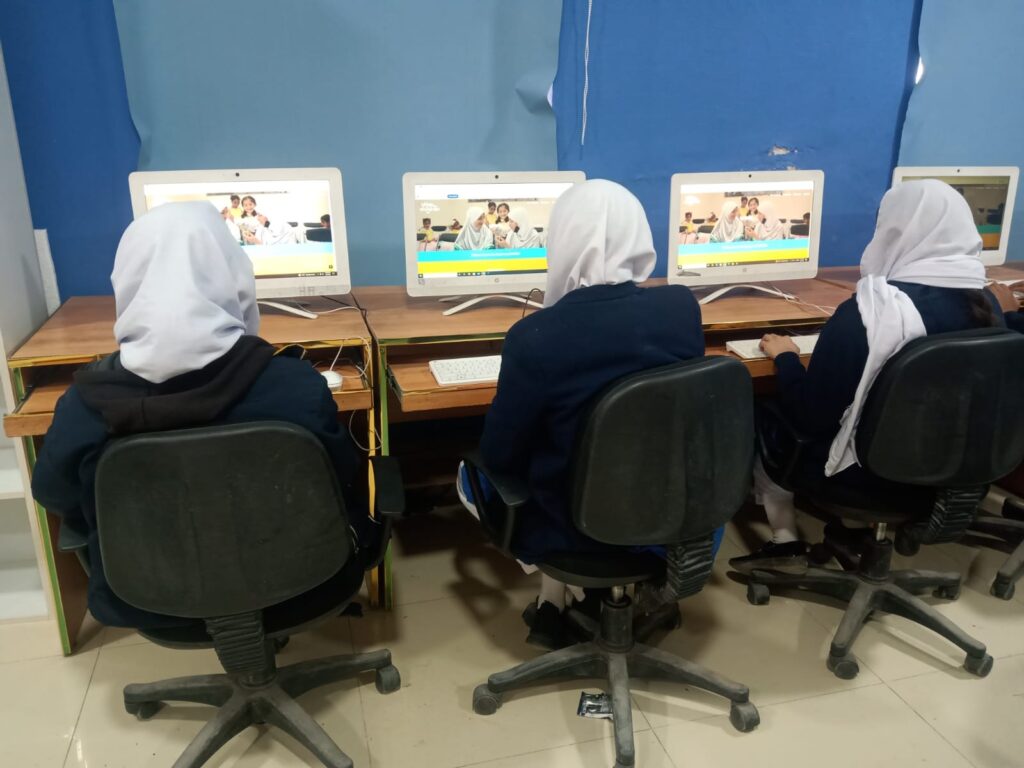
The modules created by Manzil did more than teach technical skills, they encouraged students to reflect on themselves, express their emotions, and recognize their strengths.
One of the students shared how the “Draw Yourself” activity became her favorite session because, for the first time, it encouraged her to reflect on her own strengths and identity. She shared, “The ‘Draw Yourself’ activity really helped me reflect on my strengths and qualities which I didn’t think about before this session. I realized that I am very brave and I have a lot of confidence to participate in extracurriculars.” For many girls who are rarely encouraged to see themselves beyond societal limitations, moments like these become deeply transformative; they begin to recognize their worth, their abilities, and the power of their own voice.
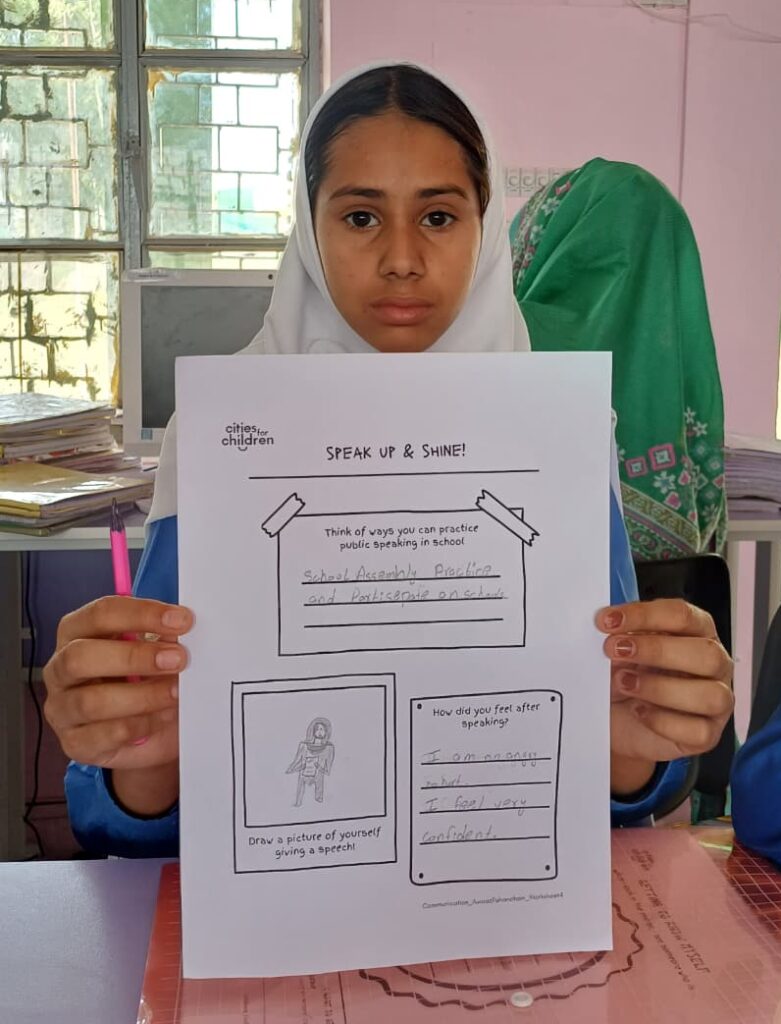
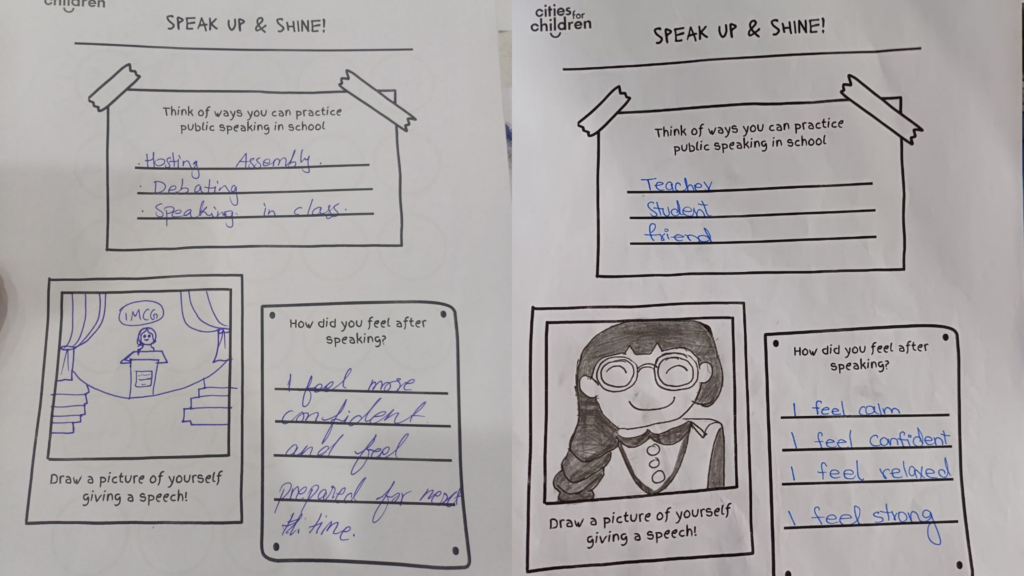
Communication modules further helped students understand the importance of expressing themselves confidently in different situations. One student shared, “I learnt how to raise and lower the volume of my sound while communicating in different settings. I speak at a lower volume when I am home, and I raise my volume while delivering a speech.” Another student reflected on how the breathing techniques helped her overcome nervousness before speaking publicly: “I delivered a speech in assembly for the first time. I was nervous, but I remembered the three deep breaths steps, did that, and got a lot of appreciation at the end.” After practicing deep breathing and rehearsing in front of a mirror, the girls confidently addressed their schools and began participating more actively in extra curricular and presentations.
These moments capture the true power of socioemotional learning. Girls who once feared speaking in public are now standing at podiums, leading presentations, participating in assemblies, and taking up space with confidence. What was once hesitation is now courage and with every speech, presentation, and raised hand, these girls are reclaiming their voices and redefining what they believe they are capable of.
One of the most powerful aspects of the Manzil program was the opportunity for girls to step beyond their classrooms and engage with real-life role models through interview activities. They spoke to lawyers, teachers, and doctors from their own communities and discovered a shared truth: confidence is built, not born.
A student interviewed a lawyer who admitted he too once struggled with hesitation at the start of his career. Another spoke to her cousin, a teacher inspired by a woman educator in her village, who went on to follow the same path. Reflecting on these stories, a student shared, “Everyone starts with fear, but confidence grows with practice and hard work.”
In these conversations, girls began to see beyond limitations and imagine themselves in spaces they once thought were out of reach.
The journeys of these young girls make one thing clear: socioemotional learning is not an “add-on” to education, it is what makes education meaningful. Confidence, creativity, and communication become more than skills; they become the means through which girls reclaim voice, identity, and power.
And when girls start to believe that their voices matter, silence is no longer their story, change is.